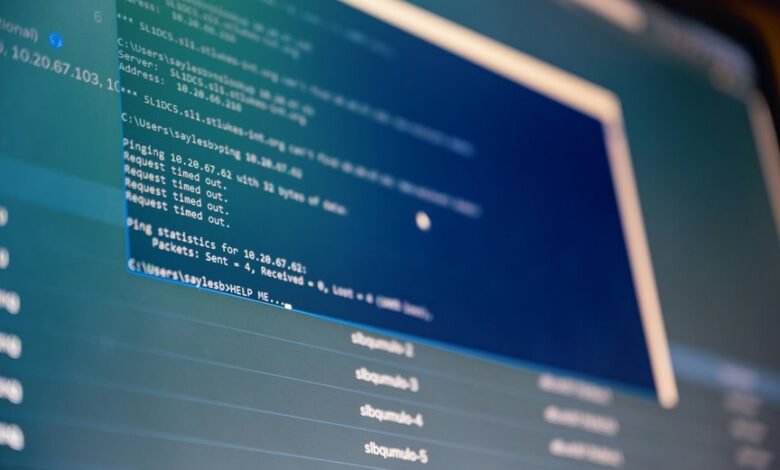
The address 10.70.122.5589 presents notable challenges within the IPv4 addressing scheme. While it appears to conform to the standard octet format, the final segment exceeds the maximum allowable value. This invalidity raises concerns about potential network disruptions and miscommunication among devices. Understanding the implications of such discrepancies is crucial. Further analysis could reveal deeper insights into the underlying issues within network management and security protocols.
Understanding System Addresses and Their Formats
System addresses serve as pivotal identifiers within computing environments, enabling the precise location and retrieval of data.
Various system address formats exist, including IPv4 and IPv6, each serving distinct purposes.
IP address classification further organizes these formats into classes such as A, B, and C, facilitating efficient routing and management within networks, thereby enhancing user autonomy over data access and connectivity.
Analyzing the Implications of 10.70.122.5589
The address 10.70.122.5589, while appearing to conform to the standard structure of an IP address, exceeds the valid range for IPv4 addresses, which is limited to values between 0 and 255 for each of its four octets.
This discrepancy raises significant IP address implications, potentially affecting network performance and reliability, as systems may misinterpret or malfunction when encountering invalid addresses within configurations.
Best Practices for Network Security and Management
Implementing robust network security and management practices is essential for safeguarding digital infrastructure against evolving threats.
Effective strategies include network segmentation to isolate sensitive data, thereby minimizing exposure to risks.
Additionally, stringent access control measures ensure that only authorized personnel can access critical systems.
Conclusion
In conclusion, the examination of the address 10.70.122.5589 underscores the critical importance of adhering to IPv4 standards. Just as a ship cannot sail with a cracked hull, networks cannot function optimally with invalid addresses. Ensuring the integrity of IP addresses is not merely a best practice; it is the cornerstone of reliable data routing and network performance. Thus, vigilance in managing system addresses is imperative for sustaining the efficiency and security of modern digital communications.